Active erosion
Shoreline retreating toward the house, the yard, or the dock over time.
Bulkheads & Seawalls
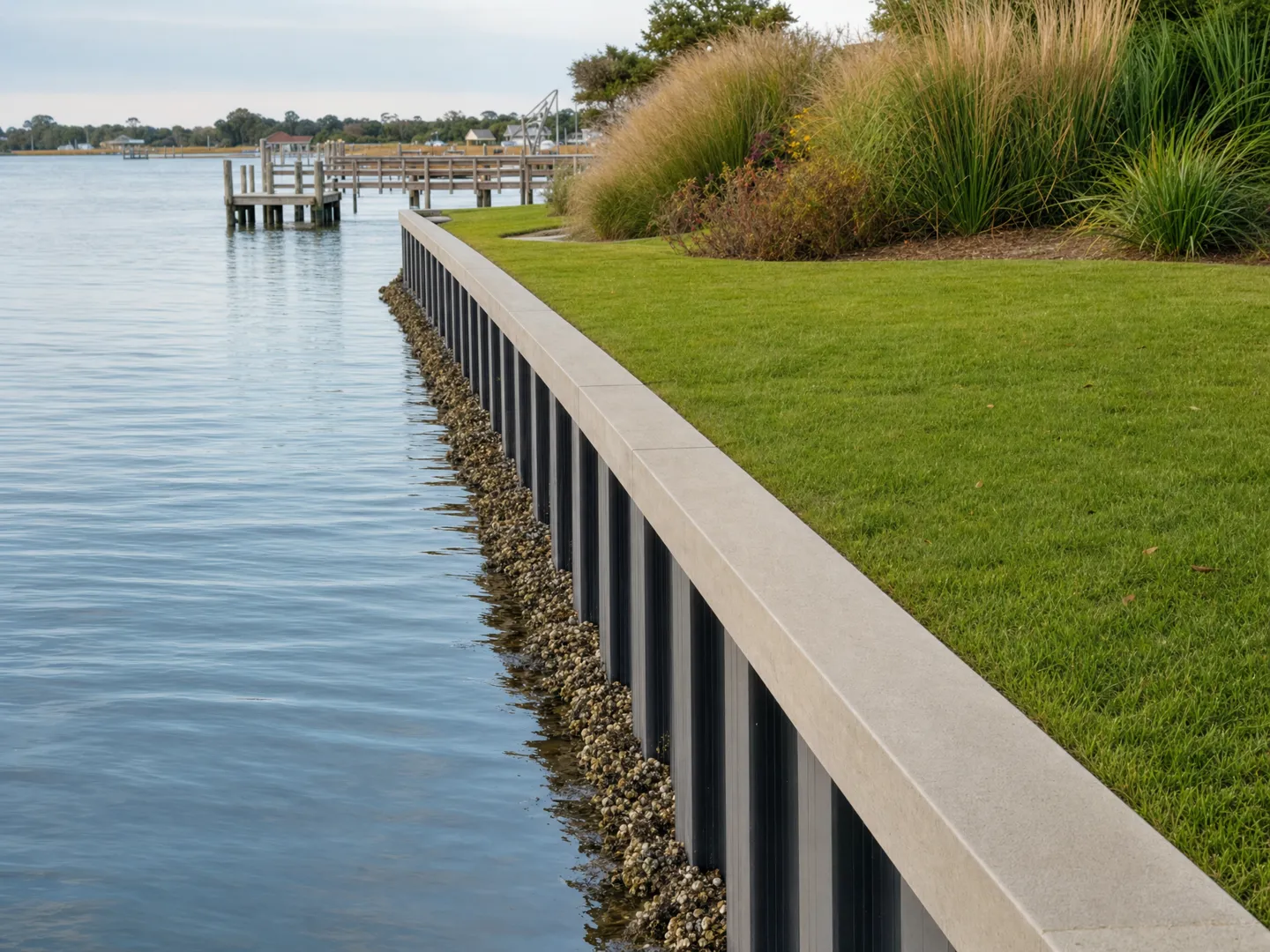
A shoreline that is losing ground puts everything behind it at risk. We build and replace bulkheads in vinyl sheet piling and wood to hold the line between your property and the water.
What this solves
Shoreline retreating toward the house, the yard, or the dock over time.
An existing bulkhead that is leaning, cracking, losing backfill, or blowing out at the joints.
Water pooling behind a wall, a sign the drainage and backfill are no longer doing their job.
Capabilities
The right material depends on your site, budget, and how long you want the structure to last with minimal upkeep. We talk through the trade-offs before anything is ordered.
On the coast
Vinyl sheet piling resists rot and marine damage and is a common long-term choice; wood remains a fit for some sites and budgets. We walk you through the trade-offs for your shoreline.
A bulkhead is a system, not just a wall. Backfill and drainage behind it determine how long it lasts and how well it performs.
How we reach the shoreline and how the wall ties into neighboring docks or property lines shapes the plan.
People use the words interchangeably. Strictly, a bulkhead mainly holds back soil along a canal, creek, or sound shoreline, while a seawall is built to take wave energy. On the North Carolina coast most residential walls on canals and the waterway are bulkheads; permanent seawalls on the oceanfront are generally not allowed under state coastal rules.
Vinyl sheet piling does not rot and resists marine organisms, which often makes it a strong long-term choice on the coast. Wood can still be appropriate for some sites and budgets. The right answer depends on your shoreline, exposure, and how long you want the wall to last.
Not always, but a leaning or blowing-out wall is a sign the system behind it is failing and should be evaluated. We look at the wall and the drainage on site before recommending repair or replacement.
Yes. We plan bulkhead work with adjacent docks and structures in mind so the shoreline and the access work together.
Waterfront Insights
The terms get used interchangeably, but North Carolina treats a wall on a sound or canal very differently from one on the ocean beach. Here is what the rules allow and how the material and design options compare.
Most waterfront projects on the North Carolina coast need a CAMA permit. Here is how the permit types work, the main numbers in the general permits for docks, boat lifts, and bulkheads, and where the Army Corps of Engineers fits in.
Lets talk
Tell us what youre planning, where the property is located, and what youd like the waterfront to do for you. Well follow up to talk through options.