No safe way to reach the water
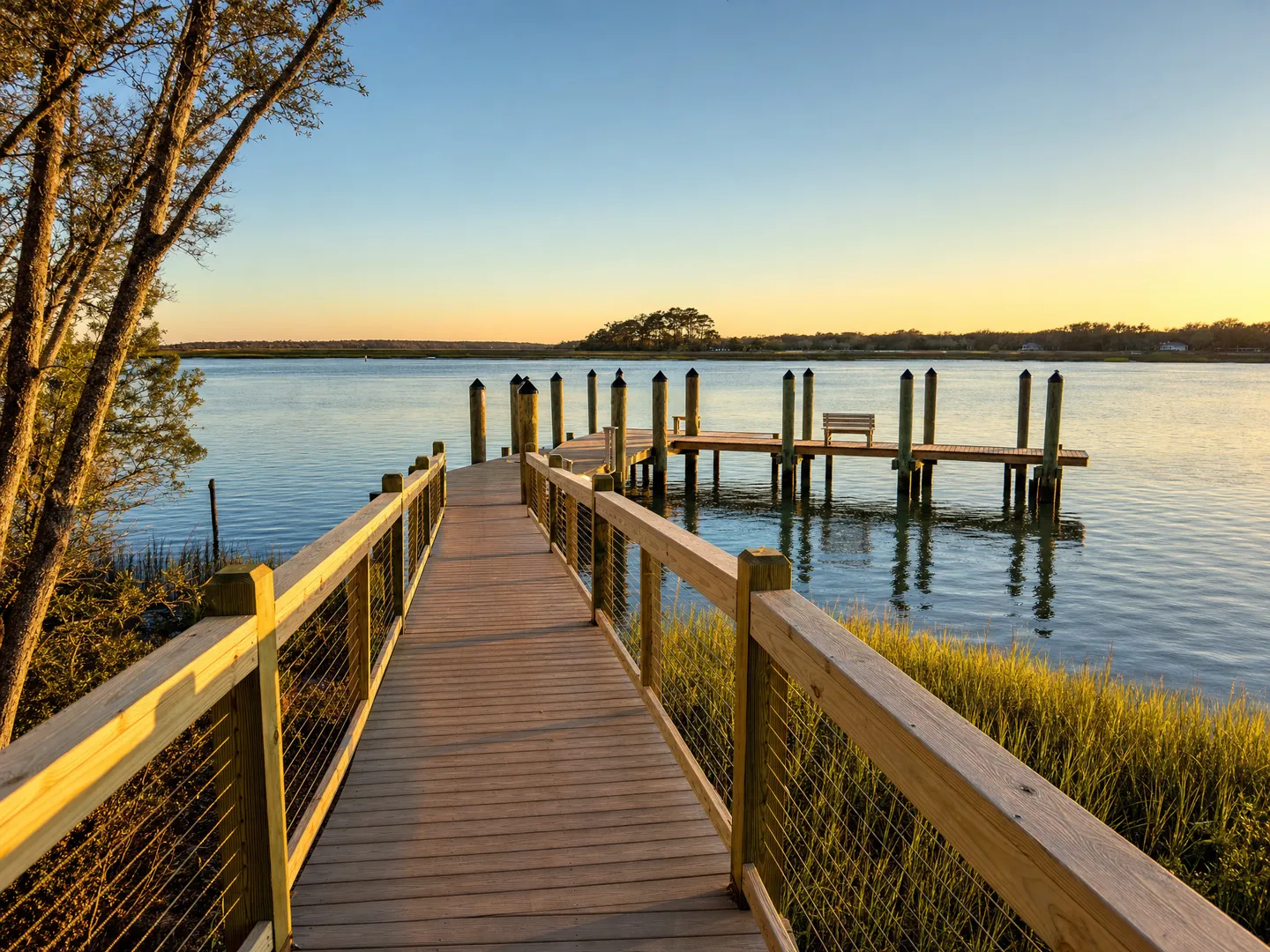
A property with waterfront value but no usable access point to launch, board, or simply enjoy the view.
Docks & Piers
We design and build docks and piers around your property, your water, and the way you use the shoreline — from a simple walkway to a covered, multi-slip structure.
What this solves
A property with waterfront value but no usable access point to launch, board, or simply enjoy the view.
A structure that was built for a different boat, a different owner, or a different water level than you have today.
Questions about water depth, marsh, setbacks, and what can actually be built before committing to a design.
Capabilities
The right material depends on your site, budget, and how long you want the structure to last with minimal upkeep. We talk through the trade-offs before anything is ordered.
On the coast
Depth at the slip, tidal range, and how you approach the structure by land and water all shape the design before materials are chosen.
Saltwater, sun, and marine growth are constant on the coast. Material and framing choices are made with that exposure in mind, not against it.
Most waterfront structures require review. We help plan a buildable scope and coordinate the approvals a project needs.
Yes. We build new custom docks and piers, and we also repair and rebuild existing structures. If you are not sure which your dock needs, we can look at it and talk through the options.
We have built with pressure-treated wood, composite decking, ironwood, vinyl, aluminum, and galvanized steel framing. The right choice depends on your budget, the site, and how long you want the structure to last with minimal upkeep.
Yes. We have experience with covered docks, multi-slip layouts, two-story structures, and non-conventional roofs. Every covered structure is planned around water depth, vessel access, and the permitting the site requires.
The property location, what you want the dock to do, any existing structure, and your vessel if a boat lift is involved. From there we can talk through a realistic scope.
Waterfront Insights
With four to five feet of average tide in much of Brunswick County, the choice between a fixed and a floating dock comes down to how you board, what you keep at the dock, and what the site allows.
The terms get used interchangeably, but North Carolina treats a wall on a sound or canal very differently from one on the ocean beach. Here is what the rules allow and how the material and design options compare.
Most waterfront projects on the North Carolina coast need a CAMA permit. Here is how the permit types work, the main numbers in the general permits for docks, boat lifts, and bulkheads, and where the Army Corps of Engineers fits in.
Lets talk
Tell us what youre planning, where the property is located, and what youd like the waterfront to do for you. Well follow up to talk through options.